OHSU Doernbecher Children's Hospital celebrates 100 years of healing, innovation


In 1926, the children of a local furniture maker celebrated what would be a turning point for children’s healthcare in Portland, in Oregon, and across the Pacific Northwest: The opening of the state’s first full-service children’s hospital.
Their father, Frank Doernbecher, had left a $200,000 bequest to his children with instructions to benefit the state. His daughter, Ada Doernbecher, and son, Edward Doernbecher, in 1921 gave the money to what was then the University of Oregon Medical School to build a children’s hospital. With an additional $75,000 raised by the newly formed Doernbecher Guild, the hospital opened five years later, on Aug. 2, with 75 beds and five volunteer physicians.
Over the past 100 years, what is now Oregon Health & Science University’s Doernbecher Children’s Hospital has transformed children’s health and well-being, pushing pediatric medicine forward and leading tidal shifts in children’s healthcare — made possible by the expertise and passion from providers, alongside invaluable community and philanthropic support.

“When you come to Doernbecher, we’re going to treat you like our family,” said Dana Braner, M.D., FAAP, FCCM, Credit Unions for Kids Chair in Pediatrics and physician-in-chief at OHSU Doernbecher.
“In your worst moment, we’re at our best. We are going to make sure that if there’s something we can do to help you get through a difficult time, we’re going to do it. That holistic, family centered, unbelievably close care is something that Doernbecher does better than any children’s hospital in the world.”
The Doernbecher family was firm on one point that has remained a foundational principle for 100 years: The hospital that bears their name would treat all children, regardless of their ability to pay. That credo stands firm today, benefiting families across Oregon and beyond.
Doernbecher through the decades
Since its founding, Doernbecher has been a lifesaving resource for thousands of kids and their families, and each decade has brought incredible new innovations and discoveries:
1930s: Outspoken advocate for children

A Red Cross nurse who spent two years treating soldiers behind the front lines during World War I, Grace Phelps, RN, was Doernbecher’s first superintendent and played an instrumental role in the hospital’s opening. During her 17 years of leadership, she made sure Doernbecher tended to the emotional and physical needs of its patients. She did everything from paying bills to overseeing nurses and ordering diapers. Phelps was one of Doernbecher’s most outspoken advocates. She raised public awareness of its achievements while emphasizing the need for additional philanthropic support.
1940s: Oregon’s first ‘blue baby’ operation
In 1947, William Conklin, M.D., a thoracic surgeon and professor at what was then the University of Oregon Medical School, became the first doctor in the western United States to perform the rare and difficult “blue baby” operation at Doernbecher to treat an infant born with tetralogy of Fallot, a congenital heart defect. The technique, which previously had only been performed on the East Coast, joined two blood vessels to improve circulation to the lungs.
1950s: Oregon’s first open-heart surgery
In 1958, Albert Starr, M.D., performed Oregon’s first pediatric open-heart surgery on a 7-year-old at Doernbecher. Two years later, Starr went on to co-invent and implant the world’s first artificial heart valve at OHSU.
1960s: Oregon’s first NICU
Portland pediatrician Gorham Babson, M.D., and Betty Weible, RN, who had established the first complete premature infant nursery in the Pacific Northwest at Doernbecher in 1950, received support from the Doernbecher Guild to expand. The result of the funding was Oregon’s first neonatal intensive care unit, which opened in 1968.
1970s: Responding to pediatric emergencies

In 1972, Doernbecher launched Oregon’s first neonatal transport system to respond to emergencies throughout the state. The modern iteration of that system, the Pediatric and Neonatal Transport (PANDA) Team, was formed in 1995, and today PANDA responds to emergencies throughout the state, making more than 800 trips each year.
1980s: Building partnerships and programs
Many of Doernbecher’s relationships and programs today took root in the 1980s. From 1985 to 1991, the children’s hospital established partnerships that are still impactful in philanthropy and support, including Kiwanis (1985), Credit Unions for Kids (1986), Friends of Doernbecher (1989), Children’s Miracle Network Hospitals (1990) and Kids Making Miracles (1991).
1990s: New building opens its doors
On July 14, 1998, OHSU Doernbecher Children’s Hospital welcomed patients into its new building. A 250,000-square-foot, six-story building, the hospital’s award-winning design is considered a model for the delivery of pediatric patient care. The Doernbecher Children’s Hospital Foundation rallied thousands of donors to raise $35 million for the building’s construction.
2000s: Nike Freestyle

In 2004, Doernbecher’s stylish collaboration with Nike — Doernbecher Freestyle — was born. An idea that began around a kitchen table and is propelled by a dedicated group of volunteers, the partnership pairs Doernbecher patients with Nike designers and developers, who work together to create one-of-a-kind shoes inspired by the patients’ health journeys. The creations are auctioned off, with the proceeds benefitting Doernbecher. Now on Doernbecher Freestyle 22, the program has raised over $44 million for children’s health.
2010s: Advancements in pediatric cancer treatment
In 2017, the U.S. Food and Drug Administration approved the use of a new gene therapy, Kymriah, for one of the most common and lethal forms of cancer in children and young adults -- acute lymphoblastic leukemia. Doernbecher was the first hospital in the Pacific Northwest – and only one of a handful of certified treatment centers in the nation - to offer this urgently needed therapy.
2020s: Breakthroughs in fetal medicine

Andrew Chon, M.D., and Raphael Sun, M.D., arrived at OHSU in 2022, specializing in performing some of the most complex fetal surgery cases in the U.S. Their work is part of Doernbecher’s Fetal Care Program, a comprehensive, expert team of neonatologists, pediatric cardiologists, maternal-fetal medicine specialists, radiologists, pediatric subspecialists and anesthesiologists. It is one of only a handful of centers in the country to provide the highest level of maternal, fetal and neonatal care in one location.
The next century of health
Pediatric healthcare has made giant strides over the past 100 years, and the myriad teams that make up Doernbecher — from Child Life to social workers to physicians to researchers — are excited to see what the next 100 years brings.
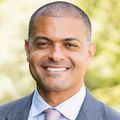
“This is a significant milestone that wouldn't be possible without generations of the best clinicians and staff in the region serving our most vulnerable patients. I express my sincere gratitude to Doernbecher’s talented clinicians, researchers and staff, past and present,” said OHSU President Shereef Elnahal, M.D., M.B.A. “It’s their hard work, dedication and compassion that make Doernbecher an incredible institution. Here's to another 100 years advancing pediatric medicine and serving patients and their families for generations to come.”
Combining patient advocacy with leading edge care, the staff, doctors and nurses at Doernbecher uphold the founding principles of the hospital while utilizing the amazing new technologies made possible through philanthropy. Doernbecher has tailored their care and facilities to meet the needs of Oregon’s smallest patients — because, physician-in-chief Braner says, every child is worth it.

“My biggest hope for the future of Doernbecher is that we continue to be a resource for every child and family that needs us. I cannot imagine this state without the resources of Doernbecher,” Braner said. “As a critical care doctor, I’m around occasionally when a child passes away, and it leaves a mark; it leaves a hole every time, because there went all of that child’s potential to change the world for the better. I think every child will change the world for the better, and it’s ripe for it, especially now. We serve as advocates for children, because they deserve it.
“Going forward, my biggest hope for Doernbecher is that we continue to get support from the government, from donors, from institutions, in order to be the best children’s hospital that we need to be.”