New research, increased awareness improving concussion recovery

Oregon Health & Science University sports medicine physicians say early intervention and, contrary to traditional wisdom, gradual activity can help athletes safely recover from concussions.
At a time of growing public awareness of concussions, especially among young athletes, OHSU experts have amassed decades of experience focused on clinical care, education and research to improve understanding and minimize risk of traumatic brain injuries.
Increased recognition has led to improved long-term health of people of all ages affected by concussion, they say.

“Overall, we’re doing a better job recognizing concussions earlier and getting people into treatment sooner,” said Sherilyn DeStefano, M.D., an OHSU School of Medicine assistant professor of family medicine who specializes in sports medicine.
Even so, she notes that a growing number of her patients are expressing concern about the risks of concussions. News coverage has highlighted recent research revealing numerous retired NFL players with chronic traumatic encephalopathy, a neurodegenerative brain disease associated with repeated hits to the head.
Parents are weighing the benefits of youth sports against the risks.

“I encourage parents to have a conversation with their kid and others in their family to weigh those risks and benefits,” said Dylan Rogers, D.O., a sports medicine specialist and assistant professor of family medicine in the OHSU School of Medicine. “The good news is game officials and coaches are imposing rules and teaching skills to lower the risk of concussion. Plus, we know that youth sports offer all the benefits of friendships, teamwork, perseverance and exercise.”
Professional and college players have heightened exposure across many years of high impact, but experts note that most people naturally recover from concussion within four weeks.
New research
For those who experience continued symptoms beyond that period, recent research from OHSU suggests it’s worthwhile to seek a referral to a physical therapist as soon as possible. The study found that people who delayed therapy tended to have lingering effects on their reaction times, balance and motor function.
In fact, increasing evidence suggests too much rest is not ideal.
“We’ve moved away from lying down in a dark room and no exercise,” DeStefano said. “As the person recovers, it’s important to gradually reengage in other aspects of their life. Recent evidence has shown that people who start by walking and then ramping up their exercise do better than people who stop exercising completely.”
While recent high-profile concussions have occurred on the football field, they can happen with many forms of activity aside from football.
Also known as mild traumatic brain injuries, concussions occur in a wide variety of contact sports and outdoor activities, running the gamut from misplayed headers in soccer to spills taken while bicycling or snowboarding on mountain slopes.
“Concussions can occur in any sport where contact is happening between athletes or in cases where an athlete may hit the ground,” DeStefano said. “I’ve treated basketball players with concussions.”
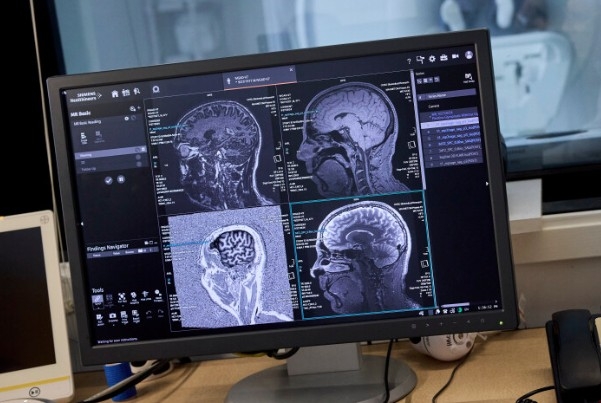
Brain imaging like a CT scan or magnetic resonance imaging generally does not reveal structural changes from concussions.
“It is more about the movement of the brain and that you’re effectively stretching the neurons, which is the specialized nerve cell in the brain that enables us to think and act,” she said. “The impact on the neurons essentially stuns them, making them less effective. Fortunately, for most people most of the time, the injury is transient and symptoms will improve.”
Symptoms can include a range of cognitive or motor impairments.
People who experience severe symptoms such as vomiting, double vision or weakness should be evaluated by a healthcare professional on scene or taken to an emergency room. Typically, treatment following concussion involves a period of rest and then gradually resuming activity.
“You want to gradually increase, step by step, to give those neurons the time to rest and recover and retrain neural pathways,” DeStefano said.
Professional training
As the state’s academic health center, OHSU is spreading its expertise across Oregon through a continuing education program available to healthcare professionals. The 90-minute training module covers common symptoms of concussion as well as return-to-play protocols used by the Oregon School Activities Association.
The training is available to a wide range of healthcare or educational professionals with an interest in improving their knowledge of concussion evaluation and care.
Signs and symptoms of concussion
OHSU experts say signs and symptoms of a concussion may develop right away, or after hours or days. They go away within 10 days for about 80% of people, according to the National Institutes of Health, but last longer for others. They can include:
- Unable to remember events before, during or after the injury
- Dizziness
- Blurry vision
- Nausea or vomiting (early on)
- Headache
- Ringing in ears
- Trouble speaking or finding the right words
- Confusion
- Sluggishness
- Changes in mood or personality
- Sensitivity to light or noise
- Problems with sleep