
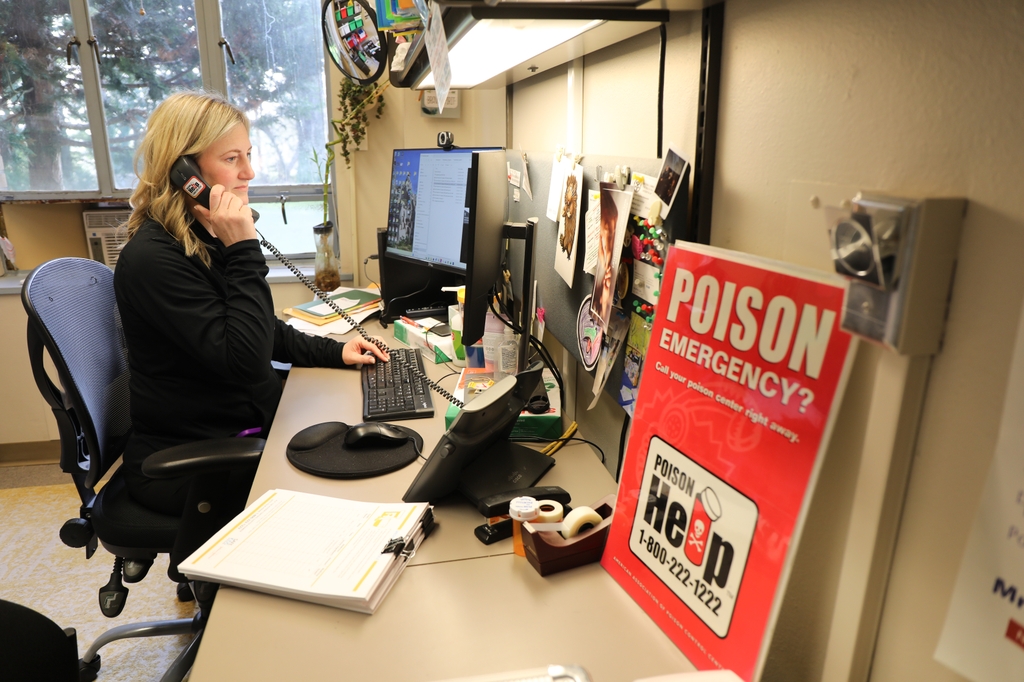
Each year the Oregon Poison Center at Oregon Health & Science University manages more than 40,000 cases from families, medical professionals and others in the community seeking information and emergency treatment advice about poisonings. More than 90% of cases are about people exposed to dangerous or potentially dangerous substances.
While not every exposure is considered toxic, some substances are especially dangerous, even in small amounts. OPC provides critical services to prevent poisoning and support to families and health care professionals in the community — not only saving lives, but also saving trips to already overburdened emergency departments.
A recent national analysis on the monetary and societal benefits of poison centers found that every $1 spent by poison centers on services generates an estimated $16.77 in benefits, due to fewer emergency room and clinical visits, shorter hospital stays, and reduced medical transportation costs.

“A trip to the emergency department is tough for patients, for very full hospitals, and potentially for families once they get the bill for treatment — which is why generally people want to avoid it for at-home incidents that need immediate advice,” said Robert Hendrickson, M.D., professor of emergency medicine in the OHSU School of Medicine and medical director of the OPC. “We are proud that our Poison Help line not only relieves burdens from the regional health care system but also gives families and others the expert knowledge they need right away.”
OPC’s Poison Help line (1-800-222-1222) is staffed 24/7 by nurses and pharmacists with specialized training in toxicology who provide poison information and emergency treatment advice to the public, EMS, and hospital clinicians caring for poisoned patients.
This National Poison Prevention Week, March 15 – 21, OPC reminds Oregonians that poisonings are preventable, and when they do occur, the OPC Poison Help line is standing by to provide fast, free expert treatment advice over the phone — preventing unnecessary hospital visits and medical bills.
Helping health systems
At a time when emergency departments face unprecedented capacity challenges — OHSU operates at 100%-plus capacity, and other hospitals in the state operate at 85%-plus — OPC is critical to reducing strain on the health care system.
Of the more than 21,000 accidental human exposure cases in Oregon homes in 2025, expert treatment advice provided by OPC ensured 93% of these cases were managed at home, keeping patients out of the hospital who didn’t need to be there and reserving limited emergency room beds for patients with more urgent or complex health care needs.
The top causes of cases managed by OPC each year are from medicine, household cleaners, personal care products, plants, drugs and alcohol. The center also treats exposures to cannabis, marine biotoxin and envenomation, and wild mushroom poisonings, among others.
In surveys, OPC callers report that going to the emergency department is the most likely alternative to calling the poison center. This not only strains hospital capacity but also places an unnecessary financial and logistical burden on families: In Oregon, the average cost of an emergency department visit exceeds $1,400, with an average visit time of more than five hours.
Other alternatives indicated by callers include “waiting to see if symptoms appear,” or “call or go to a physician’s office,” which may result in delays in life-saving treatment, Hendrickson says.
Poisonings are preventable
The Oregon Poison Center’s Poison Help line (1-800-222-1222) is staffed 24/7 by nurses and pharmacists with specialized training in toxicology.
On average, 90% of poisonings happen in homes.
“National Poison Prevention Week is a great time to consider poison risks in the home and take steps to make the environment safer,” Hendrickson said. “Our help line is available 24/7 to help, but the best strategy remains prevention.”
Strategies for preventing poisonings include:
- Keep and store all medicine, cannabis and vape products up high and out of reach and sight of children. Locked up is best. A medicine lock box is an effective, low-cost solution.
- Remember that family and visitors may bring medicine and other potentially poisonous substances into your home on their person or in a purse or bag. Designate a secure spot, such as a high shelf or locking closet, for visitors to store their belongings while in your home.
- Talk with your teens and young adults about the risks of substance use. Discuss the risks associated with consuming drugs purchased off the internet, from social media sites or from anyone who is not their health care professional. Opioids and counterfeit pills may contain deadly fentanyl.
- Keep and store all cleaning products and chemicals up high, out of sight and out of reach of children. Store them separately from food and drinks to avoid mix-ups. Leave products in their original packaging with labels intact. Avoid transferring chemicals to other unmarked containers or beverage containers. Always read and follow the directions for use prior to using them.
- Teach children from a young age not to eat anything that they find on their own. This includes loose pills, unknown liquids and plants. Remind them to ask an adult first.
- Be prepared for a poison emergency by saving the Poison Help hotline in your phone: 1-800-222-1222.
Additional poison prevention education and other poison safety resources are available on OPC’s website.