

A workforce training program at Oregon Health & Science University exceeded its goal to expand opportunities for lower-wage workers to boost their career prospects by delivering healthcare.
Known as Building Bridges, the $3 million, three-year initiative from Future Ready Oregon was designed to provide 88 Portland-area residents with free education and training in four key health care roles. The program beat that goal, training and certifying 110 people.

Building Bridges is a longstanding vision of OHSU’s largest collective bargaining unit, AFSCME Local 328, said Local President Jennie Olson.
“It was massively popular and made a huge difference in the lives of everyone who participated,” said Olson, who works as an OHSU grants and contracts administrator. “These are entry-level jobs, but they’re also hard to fill at OHSU.”
The program represents a unique partnership between OHSU, AFSCME Local 328 along with United We Heal and Unite Oregon.
“It far exceeded our expectations,” said Ernest Perry, OHSU vice president of talent acquisition and culture.
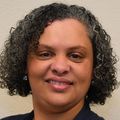
Union leaders have long envisioned the initiative as a way of providing opportunities for OHSU’s lowest-paid wage earners to grow their careers while also shoring up the state’s healthcare workforce, said Claire Irvan, an OHSU financial coordinator who previously served on the AFSCME Local 328 board and currently serves on OHSU’s board of directors.
“Reaching beyond the confines of a contract, we built this program in a partnership centered on the need to train healthcare workers for Oregon,” Irvan said.
Building Bridges Participants
Training pathway
- Dental Assistants:
- Grant Deliverable: 10
- Actual: 10 completed (Internal to OHSU=5)
- Medical Assistants
- Grant Deliverable: 15
- Actual: 14 completed (Internal to OHSU=4)
- Phlebotomy
- Grant Deliverable: 28
- Actual: 29 (Internal to OHSU=8)
- Certified Nursing Assistants
- Grant Deliverable: 30
- Actual: 52 (Internal to OHSU=17)
Race/Ethnicity
- 20 Hispanic, Latina, Latino, or Latinx
- 10 Black or African American
- 11 Two or more races/ethnicities
- 7 Asian or Asian American
- 22 White
- 30 Prefer not to answer
Gender Identity
- 57 Female
- 13 Male
- 3 Transgender Gender Variant/Non-Conforming
- 27 Prefer not to answer
The program focused on four key roles at OHSU: certified nursing assistants, dental assistants, medical assistants and phlebotomists. Those four positions alone cumulatively account for a sizable proportion of OHSU’s entire healthcare workforce — a critical need amid a lingering shortage of healthcare workers in Oregon and across the country.
“OHSU trains many of the top physicians, nurses and public health professionals in the country,” Perry said. “We said, ‘we can build the infrastructure to train these other roles, as well.’”
Applications were open to all, including current OHSU employees seeking to advance in their careers. Some trainees previously supported OHSU’s core missions in a variety of capacities including food services, custodial positions or landscaping.
Unite Oregon led community outreach to encourage people of color and people from lower income areas to apply.
“OHSU cares for patients from every walk of life, representing different languages, cultures and communities across Oregon,” Perry said. “Training people who reflect these communities makes OHSU feel like a more welcoming place for people who often meet us on the worst days of their lives.
“Having our patients meet with healthcare professionals who can better understand who they are as human beings makes their entire care experience different, and leads to better outcomes.”
‘Too good to be true’
One recent trainee said the program sounded “too good to be true” when she first heard about it.
Damahali Boreland, 24, of Gresham, had been working as a caregiver in a residential care facility when she learned about the program and applied to be trained as a certified nursing assistant. She completed three months of training earlier this year, with classes at Mount Hood Community College and a week of clinical training at OHSU Hospital.

“I was in awe when I went to OHSU,” she said. “I had never been to a hospital that huge, but the staff and nurses were kind and welcoming.”
Inspired by the experience, Boreland said she quickly landed a job as a CNA in a residential care home. In a year or two, she anticipates applying to the OHSU School of Nursing to become a registered nurse, with a goal of eventually working at OHSU.
Looking ahead
The program established a framework that could be easily revived with additional funding support. In fact, OHSU is continuing to offer in-house training for dental assistants going forward, Perry said.
“The entire partnership is thinking about how to sustain this incredible model we’ve built together,” he said.
Irvan agreed.
“The need is there, whether a trainee chooses to work at OHSU or a different health system in Oregon,” she said. “I would love to see this program continue.”
Participating in the program required about 10 hours of time each week, enabling students to work while they study.
In addition to covering educational and training costs, the program offered financial support to help students overcome social challenges that could otherwise prevent them from participating. For example, funding was available to help cover costs related to transportation, housing, internet service, food, learning accessibility tools, technology and childcare. The program also matched each participant with a mentor to help guide and support them during their learning journey.
Each of the program’s four field-specific sections offered separate educational experiences. Dental and medical assisting educational sessions spanned nine months, while nurse assisting and phlebotomy educational sessions lasted six weeks. Program lessons were taught online, supplemented by in-person, hands-on practice.