
OHSU hospital expansion project 3
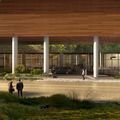
A new public transportation waiting area is part of the OHSU hospital expansion project, shown in this design rendering. (Motiv Studio and NBBJ)

OHSU hospital expansion project 6
The west facade consists of random patterned metal panels that provide varying degrees of shade and shadow. (Motiv Studio and NBBJ)
OHSU hospital expansion project 5
A design rendering of the main entrance off Campus Drive, which will be more open and welcoming for hospital patients and visitors. (Motiv Studio and NBBJ)

OHSU hospital expansion project 2
This rendering shows the OHSU Hospital expansion looking to the west from Campus Drive on Marquam Hill near OHSU’s existing Casey Eye Institute. OHSU’s board of directors on Friday approved the expansion to improve the ability to care for patients in need of complex care, while also enhancing the university’s research and education missions. (Motiv Studio and NBBJ)

OHSU hospital expansion project 4
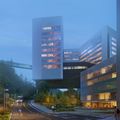
A design rendering of an exterior overview. The ends of the building are accentuated by continuous vertical fins that reinforce the Marquam Hill guideline for massing vertically. (Motiv Studio and NBBJ)
OHSU hospital expansion project 1
A design rendering of how the finished campus expansion project will look in the evenings for patients and visitors. (Motiv Studio and NBBJ)
Joel Helmke M.H.A.

Ghost providers hinder access to health care for Medicaid patients
Jane Zhu, M.D., and colleagues found that almost a third of physicians enrolled in Medicaid don’t actually care for any Medicaid patients. ‘If patients aren’t able to access the care they need, they may delay or forego care altogether, which is not only bad for patient outcomes but also bad for the health system overall,” she says. (OHSU/Christine Torres Hicks)

Profesionales médicos/as "fantasma" obstaculizan acceso a la atención a pacientes de Medicaid
La Dra. Jane Zhu y colegas encontraron que casi un tercio de médicos inscritos/as en Medicaid en realidad no atienden a pacientes de Medicaid. "Si los/las pacientes no logran acceso a la atención que necesitan, pueden postergar o aun renunciar a la atención, lo cual no solo es malo para ellos, sino también para el sistema de salud en general", afirma. (OHSU/Christine Torres Hicks)