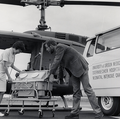
Neonatal transport
Hospital staff transfer a neonatal transport incubator between a helicopter and a vehicle from the University of Oregon Medical School Doernbecher Hospital Neonatal Intensive Care Center. (OHSU)
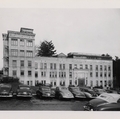
Doernbecher hospital historical photo
Since it opened its doors in 1926, OHSU Doernbecher Children’s Hospital has offered the state’s most vulnerable patients the highest level of complex care. OHSU celebrates a century of quality, lifesaving care, and looks ahead to the next 100 years of innovation. (OHSU)
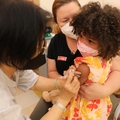
OHSU Doernbecher Children’s Hospital pediatric specialists
A child receives a vaccine at OHSU Doernbecher Children’s Hospital. Pediatric specialists encourage families to stay up to date on routine immunizations to protect against serious preventable diseases. (OHSU/Christine Torres Hicks)

DCH 100 years: Doernbecher Freestyle 20
Six young patient-designers attend the 20th annual Doernbecher Freestyle auction, which raised $1.5 million to support lifesaving care and cutting-edge research. (Courtesy)
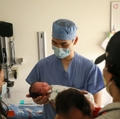
DCH 100 years: Fetal care
Raphael Sun, a surgeon in Doernbecher's Fetal Care Program, holds an infant who underwent surgery in utero to treat twin-to-twin transfusion syndrome. (OHSU/Christine Torres Hicks)
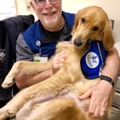
Dana Braner with Davis
“Not all medicine is administered by doctors or nurses,” said Dana Braner, M.D., F.A.A.P., F.C.C.M., Credit Unions for Kids Chair in Pediatrics and physician-in-chief at OHSU Doernbecher Children’s Hospital. Davis, a standard golden retriever lives part-time with Braner and is OHSU Doernbecher Children's Hospital's second hospital facility dog. (OHSU)
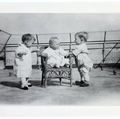
DCH 100 years: Three infants in an outdoor fenced area
Doernbecher staff tend to both emotional and physical needs, allowing three young patients enjoy fresh air on the hospital's rooftop. (OHSU)
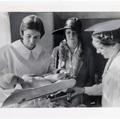
DCH 100 years: 1930 DCH nurses weighing an infant
Nurses at Doernbecher evaluate an infant in the 1930s, marking the start of a century of compassionate, family-centered care. (OHSU)
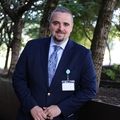
Edicin gentica para ayudar a tratar el colesterol
Ahmad Masri, M.D., M.S., es el investigador del centro de OHSU en un ensayo multicéntrico y abierto que evalúa la seguridad del uso de la edición genética CRISPR para ayudar a tratar el colesterol alto. “Si funciona de forma segura, podría ser una opción para cualquier adulto con LDL alto y mayor riesgo de arteriosclerosis”, dijo Masri. (OHSU/Christine Torres Hicks)

