Investigacin sobre la relacin intestino-cerebro en el contexto del VIH en OHSU
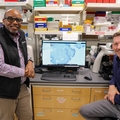
Afam Okoye, Ph.D., y Jacob Estes, Ph.D., encabezan una nueva iniciativa de investigación en OHSU para indagar cómo el daño en el tracto gastrointestinal contribuye a la neuroinflamación en adultos mayores y personas con VIH. (OHSU/Christine Torres Hicks)
Nakai Lab grants
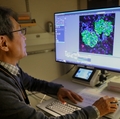
Hiroyuki Nakai, M.D., Ph.D., has been awarded more than $7.5 million in new National Institutes of Health funding to develop gene therapies that could one day provide lasting treatments for inherited kidney diseases. (OHSU/Christine Torres Hicks)
Nakai Lab
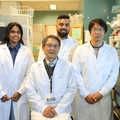
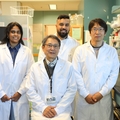
Anusha Sairavi, M.S., Hiroyuki Nakai, M.D., Ph.D., Ranjan Das, Ph.D., and Kei Adachi, Ph.D., in Nakai lab. (OHSU/Christine Torres Hicks)
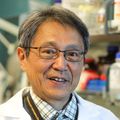
Hiroyuki Nakai, M.D., Ph.D. (OHSU)
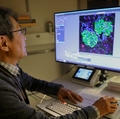
El laboratorio Nakai recibe tres subvenciones de los NIH para desarrollar posibles tratamientos curativos para enfermedades renales hereditarias
Hiroyuki Nakai, M.D., Ph.D., ha recibido más de $7.5 millones en nueva financiación de los Institutos Nacionales de Salud para desarrollar terapias génicas que algún día podrían proporcionar tratamientos duraderos para enfermedades renales hereditarias. (OHSU/Christine Torres Hicks)
Nakai Lab
Anusha Sairavi, M.S., Hiroyuki Nakai, M.D., Ph.D., Ranjan Das, Ph.D., and Kei Adachi, Ph.D., in Nakai lab. (OHSU/Christine Torres Hicks)
Ubiquitin research collaboration
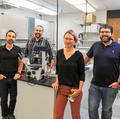
OHSU researchers, from left, Michael Cohen, Ph.D., Tim Nice, Ph.D., Isabella Rauch, Ph.D. and Jonathan Pruneda, Ph.D., have received more than $12.5 million in grants to study ubiquitin, a cellular molecule that helps regulate some of the body's most essential functions. (OHSU/Christine Torres Hicks)
Ubiquitin research collaboration at OHSU
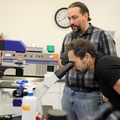
OHSU researchers have received more than $12.5 million in grants to study how cells use ubiquitin to stay healthy, how bacteria and other germs hijack the system to cause disease, and what happens when the process goes wrong. (OHSU/Christine Torres Hicks)
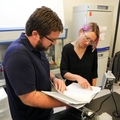
Ubiquitin research collaboration at OHSU
OHSU researchers have received more than $12.5 million in grants to study how cells use ubiquitin to stay healthy, how bacteria and other germs hijack the system to cause disease, and what happens when the process goes wrong. (OHSU/Christine Torres Hicks)