
Doernbecher pediatrics - neurology
From the moment Frank arrived at OHSU Doernbecher, efforts to determine his condition required expertise and collaboration across various specialties, including family medicine, emergency medicine, urology and neurology. (OHSU)
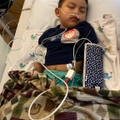
Frank at Doernbecher Children's Hospital
Catarina and Francisco Sanchez-Cacatzum were concerned when they noticed significant and abrupt behavioral changes in their 4-year-old son, Frank, and brought him to OHSU Doernbecher Children's Hospital for a comprehensive evaluation. (Courtesy of the Sanchez-Cacatzum family)


Oregon Poison Center sees dramatic increase in young children exposed to fentanyl
Oregon Health & Science University researchers reported a sharp increase in the number of Oregon children who were exposed to fentanyl in the last 3 years, and a 449% increase among the same age group nationally, highlighting the devastating impact of the fentanyl crisis on young children. The Oregon Poison Center at OHSU offers important safety tips when it comes to fentanyl, including carrying naloxone, the opioid reversal drug, which is available at pharmacies in Oregon without a prescription. (OHSU/Christine Torres Hicks)

Video download: Oregon Poison Center at OHSU fentanyl panel
The Oregon Poison Center at Oregon Health & Science University is reporting a dramatic increase in cases of young children exposed to fentanyl. To increase awareness, a panel of experts spoke to the media on Thurs., March 7, 2024, at the OHSU Auditorium: From left, Tom Jeanne, M.D., M.P.H., deputy state health officer/epidemiologist, Oregon Health Authority; Robert Hendrickson, M.D., lead author of the study, medical director of the Oregon Poison Center at OHSU, professor in the OHSU School of Medicine; and Richard Bruno, M.D., M.P.H., health officer for Multnomah County. (OHSU/Christine Torres Hicks)
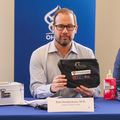
OHSU Oregon Poison Center Fentanyl Awareness Panel
The Oregon Poison Center at Oregon Health & Science University is reporting a dramatic increase in cases of young children exposed to fentanyl. To increase awareness, a panel of experts spoke to the media on Thurs., March 7, 2024, at the OHSU Auditorium: From left, Tom Jeanne, M.D., M.P.H., deputy state health officer/epidemiologist, Oregon Health Authority; Robert Hendrickson, M.D., lead author of the study, medical director of the Oregon Poison Center at OHSU, professor in the OHSU School of Medicine; and Richard Bruno, M.D., M.P.H., health officer for Multnomah County. (OHSU/Christine Torres Hicks)

Amanda Dieu, O.D., FAAO, FSLS

OHSU Myopia Management Program
Pediatric patient Melody Redfield, 10, of Corvallis, Oregon, holds a contact lense at the OHSU Casey Eye specialty clinic. The OHSU Casey Eye Institute’s Myopia Management Program provides comprehensive care for nearsightedness, which causes objects in the distance to appear blurry and can lead to serious vision problems if left untreated. Treatment options include dual-focus contact lenses, prescription eyeglasses and low-concentration atropine eye drops. (OHSU/Christine Torres Hicks)
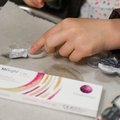
OHSU Myopia Management Program
Pediatric patient Melody Redfield, 10, of Corvallis, Oregon, practices using contact lenses at the OHSU Casey Eye specialty clinic. The OHSU Casey Eye Institute’s Myopia Management Program provides comprehensive care for nearsightedness, which causes objects in the distance to appear blurry and can lead to serious vision problems if left untreated. Treatment options include dual-focus contact lenses, prescription eyeglasses and low-concentration atropine eye drops. (OHSU/Christine Torres Hicks)

OHSU Myopia Management Program
Pediatric patient Melody Redfield, 10, of Corvallis, Oregon, examines a pair contact lenses at the OHSU Casey Eye specialty clinic. The OHSU Casey Eye Institute’s Myopia Management Program provides comprehensive care for nearsightedness, which causes objects in the distance to appear blurry and can lead to serious vision problems if left untreated. Treatment options include dual-focus contact lenses, prescription eyeglasses and low-concentration atropine eye drops. (OHSU/Christine Torres Hicks)
