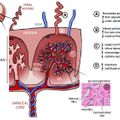
Zika placenta illustration
This artist’s image of a placenta shows how the Zika virus can affect a mother’s womb. The maternal blood vessels that feed into the placenta (A) become narrower and limit blood flow to the fetus. The leaf-like villi (C) that enable a fetus to receive oxygen-rich blood, absorb nutrients, and remove waste also become damaged. Seen under here under a microscope (D), representative cells that make up a placenta’s fetal villi also become damaged when a pregnant mother becomes infected with Zika. (OHSU)

Antonio Frias, M.D.
Antonio Frias, M.D., associate professor of obstetrics and gynecology in the OHSU School of Medicine. (OHSU)

Eric Gouaux, Ph.D.
Eric Gouaux, Ph.D., senior scientist in the OHSU Vollum Institute. (OHSU)

Peter Steyger, Ph.D.
Peter Steyger, Ph.D., a professor of otolaryngology/head and neck surgery in the OHSU School of Medicine, February 9, 2017. (OHSU/Kristyna Wentz-Graff)

BERG
Members of the Black Employee Resource Group at a Black History Month event at OHSU, 2015. (OHSU)

BERG book drive
The OHSU Black Employee Resource Group held a book drive in recognition of Black History Month, collecting over 300 books which were donated to Portland charter school KairosPDX. (OHSU/Melanie Maurice)


Sarah Feldstein Ewing, Ph.D.
Sarah Feldstein Ewing, Ph.D., OHSU School of Medicine associate professor of psychiatry (child and adolescent psychiatry); OHSU Doernbecher Children's Hospital Adolescent Behavioral Health Clinic director.
(OHSU)

Travis Lovejoy, Ph.D., M.P.H.
Travis Lovejoy, Ph.D., M.P.H., assistant professor of psychiatry in the OHSU School of Medicine and a clinical psychologist in the VA Portland Health Care System. (OHSU)

Mary Zelinski, Ph.D.
Mary Zelinski, Ph.D., research associate professor at the ONPRC at OHSU and associate professor of obstetrics and gynecology in the OHSU School of Medicine. (OHSU)
