
El Oregon Behavioral Health Coordination Center 2
Stephanie Gilliam, MN, RN, directora de Mission Control de OHSU, explica los datos del Oregon Medical Coordination Center, u OMCC. La nueva herramienta de seguimiento de servicios de salud conductual se basa en el modelo exitoso del OMCC, en el que el equipo usa datos en tiempo real de capacidad de camas de hospital y servicios de cuidados críticos disponibles para asignarlos de manera eficiente a los pacientes que necesitan tratamiento. (OHSU/Christine Torres Hicks)

El Oregon Behavioral Health Coordination Center 1
Rachel Adair, MSN, RN, directora adjunta del centro de traslados de OHSU, ayuda a coordinar la asignación de camas a través de la herramienta de seguimiento de capacidad en tiempo real. OHSU encabezó la creación de paneles de control de capacidad de camas en tiempo real para que un equipo ayude a los proveedores de todo el estado a encontrar la atención que sus pacientes necesitan. (OHSU/Christine Torres Hicks)
New tool allows OHSU partners to coordinate behavioral health bed capacity across region
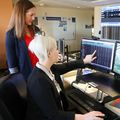
Stephanie Gilliam, MN, RN, director of Mission Control at OHSU, left, and Rachel Adair, MSN, RN, assistant director of the transfer center at OHSU, discuss data on the new Oregon Behavioral Health Coordination Center dashboard. The tool allows mental health care providers in the Portland region to see behavioral health bed capacity in real time—urgently needed amid limited inpatient resources and increasing need for both adult and pediatric patients. Ultimately, OHSU and partners aim to fund dedicated OBCC staff who will assist in coordinating placement of both adult and pediatric patients. (OHSU/Christine Torres Hicks)

Improving coordinated care for behavioral health
Stephanie Gilliam, MN, RN, director of Mission Control at OHSU, explains Oregon Medical Coordination Center, or OMCC, data. The new behavioral health tracking tool is based in the successful OMCC model, in which an team uses real-time data about hospital bed availability and available critical care services to efficiently place patients in facilities where they can be treated. (OHSU/Christine Torres Hicks)

OBCC Mission Control at OHSU
Stephanie Gilliam, MN, RN, director of Mission Control at OHSU, explains Oregon Medical Coordination Center, or OMCC, data. The new behavioral health tracking tool is based in the successful OMCC model, in which an team uses real-time data about hospital bed availability and available critical care services to efficiently place patients in facilities where they can be treated. (OHSU/Christine Torres Hicks)

Stephanie Gilliam, MN, RN
Stephanie Gilliam, MN, RN, director of Mission Control at OHSU. (OHSU/Christine Torres Hicks)

Oregon Behavioral Health Coordination Center
Rachel Adair, MSN, RN, assistant director of the transfer center at OHSU, helps coordinate patient placement through the real-time bed capacity tracking tool. OHSU has led the creation of real-time bed capacity dashboards that enable a team to help providers across the state find the appropriate care for their patients. (OHSU/Christine Torres Hicks)

20230428 OBCC Mission Control 15
Rachel Adair, MSN, RN, assistant director of the transfer center at OHSU, helps coordinate patient placement through the real-time bed capacity tracking tool. OHSU has led the creation of real-time bed capacity dashboards that enable a team to help providers across the state find the appropriate care for their patients. (OHSU/Christine Torres Hicks)

Prenatal care and mental health
Maria Rodriguez, M.D., M.P.H., professor of obstetrics and gynecology in the OHSU School of Medicine, goes over mental health resources with a patient. In a new study, OHSU researchers identify significant maternal mental health disparities among low-income immigrants who don’t have access to Medicaid coverage available when states expand their programs. (OHSU/Christine Torres Hicks)

