
Un experto en aprendizaje automático ayuda a revelar los secretos del cáncer

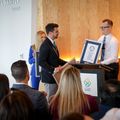
Cheering OHSU on
Attendees watch the OHSU team receive certification for detecting the world’s smallest skin cancer. (OHSU/Christine Torres Hicks)

OHSU earns recognition
Attendees watch the OHSU team receive certification for detecting the world’s smallest skin cancer. (OHSU/Christine Torres Hicks)
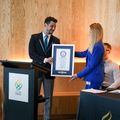
Guinness World Records at OHSU
Guinness World Records judge Andrew Glass presents Alexander Witkowski, M.D., Ph.D., an award for detecting the world’s smallest skin cancer. (OHSU/Christine Torres Hicks)
Detecting the world’s smallest skin cancer
Guinness World Records judge Andrew Glass presents Joanna Ludzik, M.D., Ph.D., an award for detecting the world’s smallest skin cancer. (OHSU/Christine Torres Hicks)
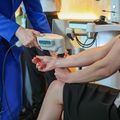
Reflectance Confocal Microscopy
Joanna Ludzik, M.D., Ph.D., demonstrates the Reflectance Confocal Microscopy device, an imaging tool that helps clinicians monitor and diagnose skin lesions without needing to cut into the skin. This tool was used to help diagnose the world’s smallest skin cancer. (OHSU/Christine Torres Hicks)
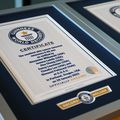
OHSU dermatologists recognized
Guinness World Records recognizes a team of OHSU dermatologists for the world’s smallest skin cancer detected. (OHSU/Christine Torres Hicks)
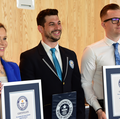
Awards
Joanna Ludzik, M.D., Ph.D., Guinness World Records judge Andrew Glass, and Alexander Witkowski, M.D., Ph.D. Glass awarded each team member a certificate for their newly earned record for detecting the world’s smallest skin cancer. (OHSU/Patrick Kinghorn)

Dermatlogos de OHSU detectan el cancer de piel ms pequeo del mundo 4
Los asistentes ven al equipo de OHSU recibir la certificación por detectar el cáncer de piel más pequeño del mundo. (OHSU/Christine Torres Hicks)
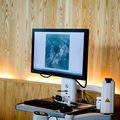
Dermatlogos de OHSU detectan el cancer de piel ms pequeo del mundo 2
Joanna Ludzik, M.D., Ph.D., demuestra el dispositivo de microscopía confocal de reflectancia, una herramienta de imagen que ayuda a los médicos a monitorear y diagnosticar lesiones cutáneas sin necesidad de cortar la piel. Esta herramienta se utilizó para ayudar a diagnosticar el cáncer de piel más pequeño del mundo. (OHSU/Christine Torres Hicks)
