
Don’t wait for emergency care, OHSU physicians urge
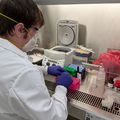
COVID-19 genome sequencing
Brendan O'Connell isolates viral RNA from a sputum sample from a patient positive for COVID-19/SARS-CoV-2. Researchers at OHSU are sequencing COVID-19-positive samples and comparing genomes to characterize how COVID-19 is spreading around the country and world and how it entered and is spreading in Oregon. (OHSU)
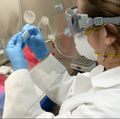
COVID-19 genome sequencing
Ruth O'Connell, Ph.D., is inspecting samples going through cDNA synthesis, which converts the single stranded viral RNA into double stranded molecule that then can be sequenced. Researchers at OHSU are sequencing COVID-19-positive samples and comparing genomes to characterize how COVID-19 is spreading around the country and world and how it entered and is spreading in Oregon. (OHSU)

May 18: In response to today’s injunction on executive orders, OHSU hosts press conference to discuss personal, community actions to slow the spread of COVID-19

COVID-19-related illness among children: What we know so far

SARS-CoV-2
This scanning electron microscope image shows SARS-CoV-2 (orange) also known as 2019-nCoV, the virus that causes COVID-19 isolated from a patient in the U.S., emerging from the surface of cells (green) cultured in the lab. (Flickr/NIAID-RML) CC license

Oregon’s COVID-19 story emerges from gene sequencing

Asian and Pacific Islander elders grateful for care kits
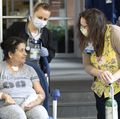
Coronavirus patient discharged
Maria Nevarez, left, talks with Kelly Hyde, R.N., center, and Darcey Ayala, R.N., as Nevarez leaves OHSU after 58 days in the hospital, May 13, 2020. Nevarez was one of Oregon Health & Science University’s first patients with COVID-19. (OHSU/Kristyna Wentz-Graff)
