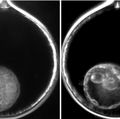
Rhesus excluded blastomeres first 3 and fragments last
Researchers the Oregon National Primate Research Center at OHSU found that blastomeres (images 1-3) and their cellular fragments (image 4) can act as a trash bin within a mosaic embryo, and exclude genetic abnormalities. (OHSU/Shawn Chavez, Ph.D.)
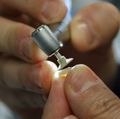
New dental compound
A slice of tooth is prepared for testing in the Pfeifer Polymers Lab at OHSU's School of Dentistry, Feb. 19, 2019. (OHSU/Kristyna Wentz-Graff)
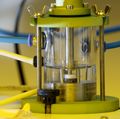
New dental compound
A bioreactor in the Pfeifer Polymers Lab at OHSU's School of Dentistry, simulates oral environments to allow testing on a slice of tooth (white slice submerged in fluid) with simulated restoration, Feb. 19, 2019. (OHSU/Kristyna Wentz-Graff)
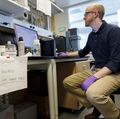
New dental compound
Steven Lewis, research associate in the Pfeifer Polymers Lab at OHSU's School of Dentistry, runs an experiment to test filler particles which are part of composite restorations, Feb. 19, 2019. (OHSU/Kristyna Wentz-Graff)
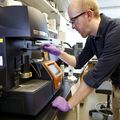
New dental compound
Steven Lewis, research associate in the Pfeifer Polymers Lab at OHSU's School of Dentistry, runs an experiment to test filler particles which are part of composite restorations, Feb. 19, 2019. (OHSU/Kristyna Wentz-Graff)
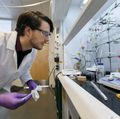
New dental compound
Senior chemist Matt Logan in the Pfeifer Polymers Lab at OHSU's School of Dentistry, tests composite components, Feb. 19, 2019. (OHSU/Kristyna Wentz-Graff)
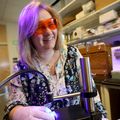
Dental fillings could last twice as long

Join the herd: Vaccinate and save lives

Are mosaic embryos the ‘dark horse’ of IVF?

