Germline editing: PN 1
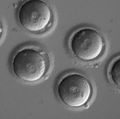
Germline editing image (PN 1) depicting the first sign of successful in vitro fertilization after co-injection with a gene-correcting enzyme and sperm carrying a hypertrophic cardiomyopathy mutation. (OHSU)
Germline: Blastocyst 3
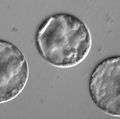
This germline editing image (Blastocyst 3) shows embryos developing into blastocysts after co-injection, a stage that could inform future approaches to helping families avoid inherited genetic disease. (OHSU)
VIDEO: Download footage from press conference
Press conference with Shoukhrat Mitalipov, Ph.D., and Sanjiv Kaul, M.D., at OHSU, August 2, 2017. (OHSU)
VIDEO: Download germline editing video
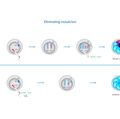
This video of germline editing compares S-phase (post-fertilization) CRISPR/Cas9 injection with M-phase co-injection of a gene-correcting enzyme and sperm from a donor with a disease-causing mutation. Initiating repair at fertilization was shown by OHSU researchers to eliminate mosaicism and correct the mutation in developing embryos. (OHSU)

VIDEO: Download interview footage of Shoukhrat Mitalipov, Ph.D.
Interview footage of Shoukhrat Mitalipov, Ph.D., at Oregon Health & Science University. (OHSU)
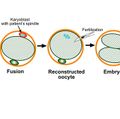
Gene therapy graphic
Illustration of mitochondrial replacement therapy depicts a process under study to help prevent the transmission of inherited mitochondrial disease from parent to child. (OHSU)

Mitalipov and b-roll of laboratory procedures
Shoukhrat Mitalipov, Ph.D., discusses research to develop therapies aimed at preventing mitochondrial disease, with b-roll of laboratory procedures and preclinical studies, 2014. (OHSU)

Mitalipov sound bites
Shoukhrat Mitalipov, Ph.D., discusses research to advance therapies for mitochondrial disease, with b-roll of laboratory procedures and preclinical research. (OHSU, 2014)

Mitalipov talks about his 2013 embryonic stem cell breakthrough
Scientists at Oregon Health & Science University and the Oregon National Primate Research Center reprogram human skin cells into embryonic stem cells capable of developing into specialized cell types, advancing research toward potential treatments for conditions such as Parkinson’s disease, multiple sclerosis and spinal cord injuries. (OHSU)
