
Steven Prewitt (OHSU)

OHSU Foundation welcomes new trustees

Viewpoint: diplomacia para la salud cerebral como marco para abordar los desafíos globales en pos de la igualdad en el acceso a la salud del cerebro

Viewpoint: Brain health diplomacy is a framework for the global challenge of brain health equity
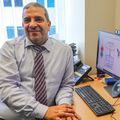
Nizar Chahin, M.D., study shows promising results for autoimmune diseases
Nizar Chahin, M.D., assistant professor of neurology in the OHSU School of Medicine and director of neuromuscular treatment for OHSU Health. (OHSU/Christine Torres Hicks)

Kylie Swenson at the beach
Kylie Swenson, 39, is an OHSU clinical trial participant who lives in Central Point. The clinical trial uses a form of chimeric antigen receptor, or CAR-T, to treat generalized myasthenia gravis, or MG, a debilitating autoimmune neurological disease. (Courtesy of Kylie Swenson)

Kylie Swenson, OHSU clinical trial patient
Kylie Swenson, 39, is an OHSU clinical trial participant who lives in Central Point. The clinical trial uses a form of chimeric antigen receptor, or CAR-T, to treat generalized myasthenia gravis, or MG, a debilitating autoimmune neurological disease. (Courtesy of Kylie Swenson)

Paul Mitalipov
Paul Mitalipov, 17, recently co-authored a paper with his father Shoukhrat Mitalipov, Ph.D., director of the OHSU Center for Embryonic Cell and Gene Therapy, making the case for using gene-editing tools to prevent inherited disease. (OHSU/Kristyna Wentz-Graff)

Danielle Mitalipov
Danielle Nargiz Mitalipov, 20, co-authored two papers in 2014 and 2015 while volunteering in her father Shoukhrat Mitalipov's lab. (Photo courtesy of Danielle Mitalipov)

The case for gene editing
Shoukhrat Mitalipov, Ph.D., (left) director of the OHSU Center for Embryonic Cell and Gene Therapy, co-authored an editorial with his 17-year-old son, Paul Mitalipov, making the case for using gene-editing tools to prevent inherited disease. (OHSU/Kristyna Wentz-Graff)
