
BRILLIANCE trial
Staff at Oregon Health & Science University's Casey Eye Institute perform the first-ever in vivo CRISPR gene edit procedure for the BRILLIANCE clinical trial. The study uses the gene-editing technology CRISPR to repair mutations in the CEP290 gene that cause a rare form of inherited blindness called Leber congenital amaurosis type 10. The trial is sponsored by Allergan plc. and Editas Medicine. (OHSU/Kristyna Wentz-Graff)


BRILLIANCE trial
Andreas Lauer, M.D., right, prepares to perform the first-ever in vivo CRISPR gene edit procedure for the BRILLIANCE clinical trial at Oregon Health & Science University's Casey Eye Institute. The study uses the gene-editing technology CRISPR to repair mutations in the CEP290 gene that cause a rare form of inherited blindness called Leber congenital amaurosis type 10. The trial is sponsored by Allergan plc. and Editas Medicine. (OHSU/Kristyna Wentz-Graff)
BRILLIANCE trial
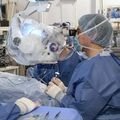
Andreas Lauer, M.D., right, performs the first-ever in vivo CRISPR gene edit procedure for the BRILLIANCE clinical trial at Oregon Health & Science University's Casey Eye Institute. The study uses the gene-editing technology CRISPR to repair mutations in the CEP290 gene that cause a rare form of inherited blindness called Leber congenital amaurosis type 10. The trial is sponsored by Allergan plc. and Editas Medicine. (OHSU/Kristyna Wentz-Graff)

OHSU performs first-ever CRISPR gene editing within human body

Stephen David, Ph.D.
Stephen David, Ph.D., associate professor of otolaryngology and behavioral neuroscience in the OHSUSchool of Medicine, Feb. 26, 2020. (OHSU/Kristyna Wentz-Graff)
Stephen David, Ph.D.
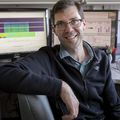
Stephen David, Ph.D., associate professor of otolaryngology and behavioral neuroscience in the OHSUSchool of Medicine, Feb. 26, 2020. (OHSU/Kristyna Wentz-Graff)

How the brain hears
A new grant will enable researchers to compare deep neural networks models, said principal investigator Stephen Stephen David, Ph.D., Feb. 26, 2020. (OHSU/Kristyna Wentz-Graff)

New research will model hearing

