
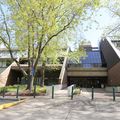
OHSU Mackenzie Hall
CDRC Portland Building
Investigadores de OHSU aseguran una subvención de los NIH para estudiar el deterioro dental desde sus raíces microbianas
OHSU researcher secures NIH grant to target tooth decay at its microbial roots

Abortion bans lead to worse outcomes for miscarriages
OHSU researchers highlight dangerous clinical impacts of abortion bans for women experiencing a miscarriage, including delayed care and limitations in treatment options. (OHSU/Christine Torres Hicks)
Una proteína causante de cáncer también ayuda a los tumores a reparar su ADN
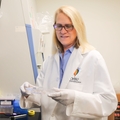
Rosalie Sears, Ph.D., es la autora principal de un nuevo estudio publicado en Genes & Development. Su equipo en la OHSU descubrió que la proteína MYC —responsable del desarrollo del cáncer— también ayuda a las células tumorales dañadas a sobrevivir al tratamiento mediante la reparación de su ADN; un hallazgo que podría conducir a nuevas estrategias para hacer más eficaces la quimioterapia y otras terapias que dañan el ADN. (OHSU/Christine Torres Hicks)

Gabriel Cohn, Ph.D. (Courtesy)
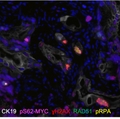
inmunofluorescencia cíclica de un tumor de adenocarcinoma ductal pancreático
Esta es una imagen de inmunofluorescencia cíclica de un tumor de adenocarcinoma ductal pancreático (PDAC) de un paciente humano. Muestra que, en los tumores humanos, la serina 62 fosforilada de MYC se superpone con la maquinaria de reparación y daño del ADN. (Cortesía)

Rosalie Sears, Ph.D. (OHSU)
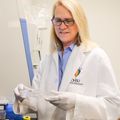
Cancer-causing protein also helps tumors repair their DNA
Rosalie Sears, Ph.D., is senior author of a new study published in Genes & Development. Her team at OHSU found that the cancer-driving protein MYC also helps damaged tumor cells survive treatment by repairing their DNA — a discovery that could lead to new strategies to make chemotherapy and other DNA-damaging therapies more effective. (OHSU/Christine Torres Hicks)
