OHSU in the news

Two new partners join the International Alliance for Cancer Early Detection for its next phase

Cancer Research UK February 13, 2025
The Dana Farber Cancer Institute and the German Cancer Research Centre have joined the international Alliance for Cancer Early Detection (ACED) initiative, led by the OHSU Knight Cancer Institute, Cancer Research UK, University of Manchester, University College London, and the University of Cambridge. Incoming alliance chair Rebecca Fitzgerald said, “The next phase of the expanding ACED network is an exciting opportunity for collaborations in early cancer detection.”

First transgenic primate model created for hepatitis B research

Medical Xpress February 13, 2025
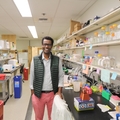
Ben Burwitz, Ph.D., and his research team develop the first transgenic nonhuman primate model for studying hepatitis B virus. The breakthrough could lead to the development of new treatments for the disease, which affects about 250 million people globally and results in nearly 1 million deaths annually. Burwitz says, “We’ve seen success with treatments for hepatitis C that wipe out the virus, and that’s the goal here. Developing a drug that’s effective, easy to distribute and affordable for global populations is critical.”

Even on Tafamidis, ATTR-CM Patients Face High Mortality Over Time

tctMD February 13, 2025
In a TCTMD story about a new drug to treat transthyretin amyloid cardiomyopathy, Ahmad Masri, M.D., says, “We went from a condition that was 100% fatal, untreatable, and no approved medications to now having a couple. This is a very early real-world study done right around the time of approval and we’re already seeing there are signals where mortality looks better than what we have expected.”

OHSU Announces Pancreatic Cancer Blood Test

KEX Radio February 12, 2025
Researchers at Oregon Health & Science University have developed a test called PAC-MANN, the abbreviation for “protease activity-based assay using a magnetic nanosensor,” which uses a small blood sample to detect changes in protease activity — a key indicator of pancreatic ductal adenocarcinoma, or PDAC, the most common and deadly form of pancreatic cancer.

Check your carbon monoxide alarm ASAP before the winter storm, experts warn

KOIN-TV February 12, 2025
The Oregon Poison Center reminds the public about the risk of carbon monoxide poisoning during a dip in temperatures and persistent winter weather across the state. “This is the perfect time to check your battery-operated carbon monoxide detector or install one on every level of your home if you haven’t already done so,” says Rob Hendrickson, M.D. “If you need to use a generator or alternative cooking source, it is extremely important to place them outside, well away from windows, doors and ventilation systems.”

PAC-MANN Assay Shows Promise for Early Detection of Pancreatic Cancer

Inside Precision Medicine February 12, 2025
A team of OHSU researchers led by Jared Fischer, Ph.D., and Jose Montoya Mira, Ph.D., have developed a new blood test that identifies hard-to-detect pancreatic cancer with 85% accuracy. Fischer says, “The problem with pancreatic cancer is that we often catch it too late. Our goal with PAC-MANN is to give clinicians a tool that can detect the disease much earlier, when more treatment options are available and there is a better chance of survival.”

A pancreatic cancer blood test called PAC-MANN could spot the disease early

Science News February 12, 2025
A team of OHSU researchers led by Jared Fischer, Ph.D., and Jose Montoya Mira, Ph.D., have developed a new blood test that identifies hard-to-detect pancreatic cancer with 85% accuracy. Fischer says, “The problem with pancreatic cancer is that we often catch it too late. Our goal with PAC-MANN is to give clinicians a tool that can detect the disease much earlier, when more treatment options are available and there is a better chance of survival.”

Cheap blood test detects pancreatic cancer before it spreads

Nature February 12, 2025
A team of OHSU researchers led by Jared Fischer, Ph.D., and Jose Montoya Mira, Ph.D., have developed a new blood test that identifies hard-to-detect pancreatic cancer with 85% accuracy. Fischer says, “The problem with pancreatic cancer is that we often catch it too late. Our goal with PAC-MANN is to give clinicians a tool that can detect the disease much earlier, when more treatment options are available and there is a better chance of survival.”

Federal Research Funding, Now Imperiled, Supports 5,000 Jobs in Oregon

Willamette Week February 12, 2025
Media cover potential impacts to OHSU, Oregon and scientific research in the U.S. if the NIH reduction of indirect costs holds. “There’s 1,900 research workers at OHSU and I don’t think any of them feel safe. I know I don’t feel safe,” says Lynne Swarbrick, B.S.
See more stories