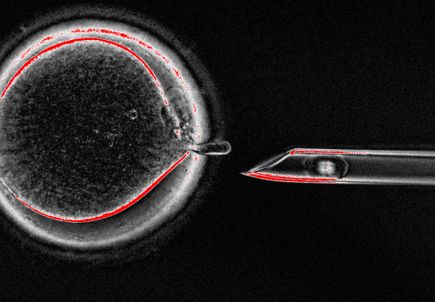
A new discovery may unlock the answer to a vexing scientific question: How to conduct mitochondrial replacement therapy, a new gene-therapy technique, in such a way that safely prevents the transmission of harmful mitochondrial gene mutations from mothers to their children.
Long-term exposure to cosmic radiation could alter the brain and change behavior in astronauts bound for Mars, according to new research led by scientists at OHSU in Portland, Oregon.
An analysis of data from 19 clinical trials, led by the OHSU Pacific Northwest Evidence-Based Practice Center, found that using statin drugs provided wide-ranging prevention benefits without significantly increasing the risk of serious side effects in people who have not had a previous heart attack or stroke.
As we age, as many as 10 to 30 percent of us spontaneously carry mutations in our blood cells that put us at risk for blood cancers and heart disease. Researchers at OHSU are leading a unique study for women aged 65 and older called WEAR, or Women.
Not all states allow nurse practitioners to make a patient’s treatment wishes part of their medical record, yet a six-year study concludes that they can improve seriously ill patients’ access to advance-care planning. Nurse practitioners often serve as the primary care provider or a member of the team caring for patients in the last months of their lives when they are most likely to seek end-of-life treatment counseling.
OHSU leaders, faculty, staff and students gathered in the late afternoon rain outside Mackenzie Hall to mark an institution-wide commitment to address gun violence as a public health issue.
Six Oregon health care organizations joined together in a $21.5 million partnership with Central City Concern to build 382 units of affordable housing. The projects will include a new building at 122nd and Burnside that will also provide medical services to those recovering from mental illness and drug addiction.